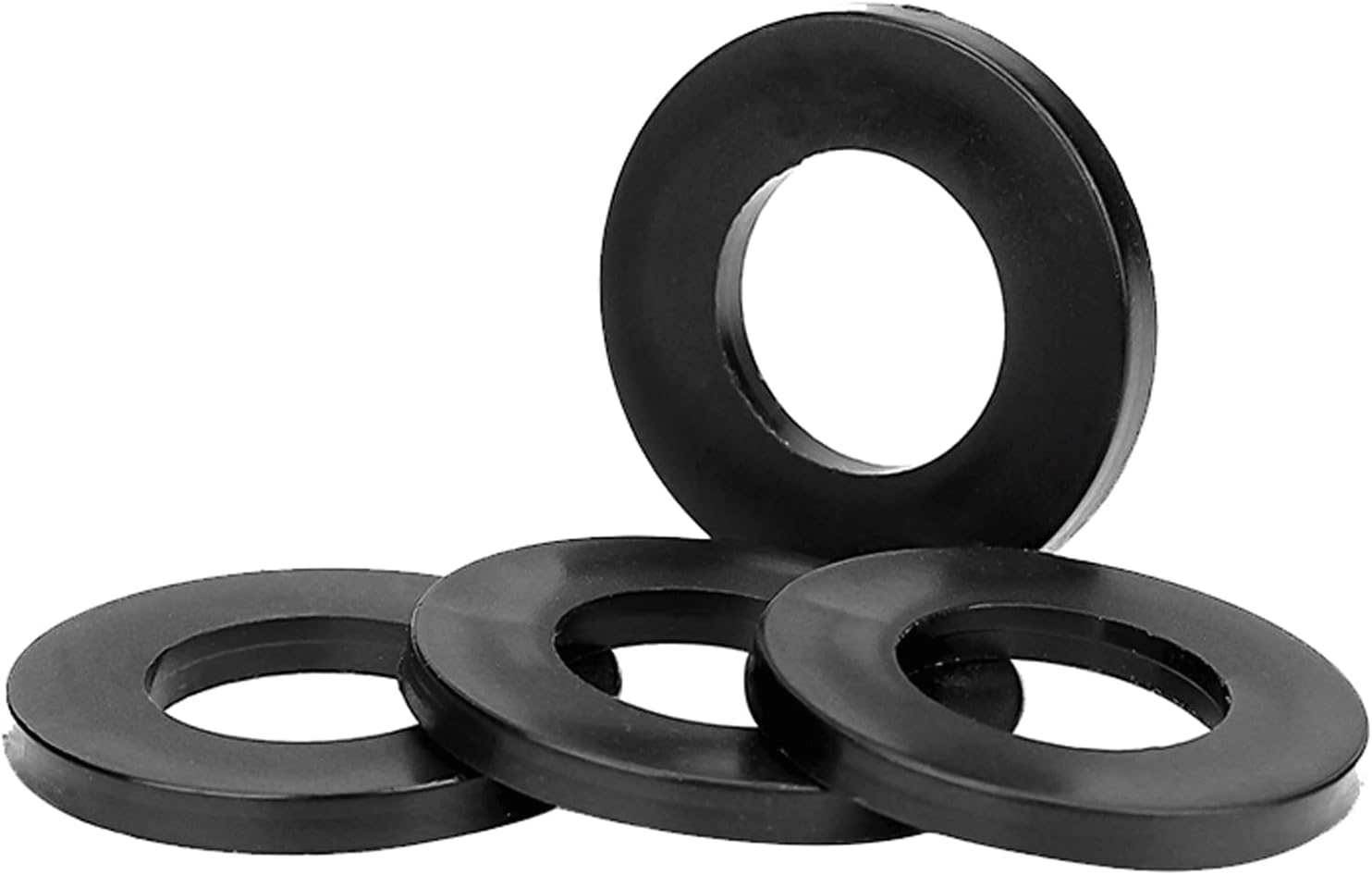
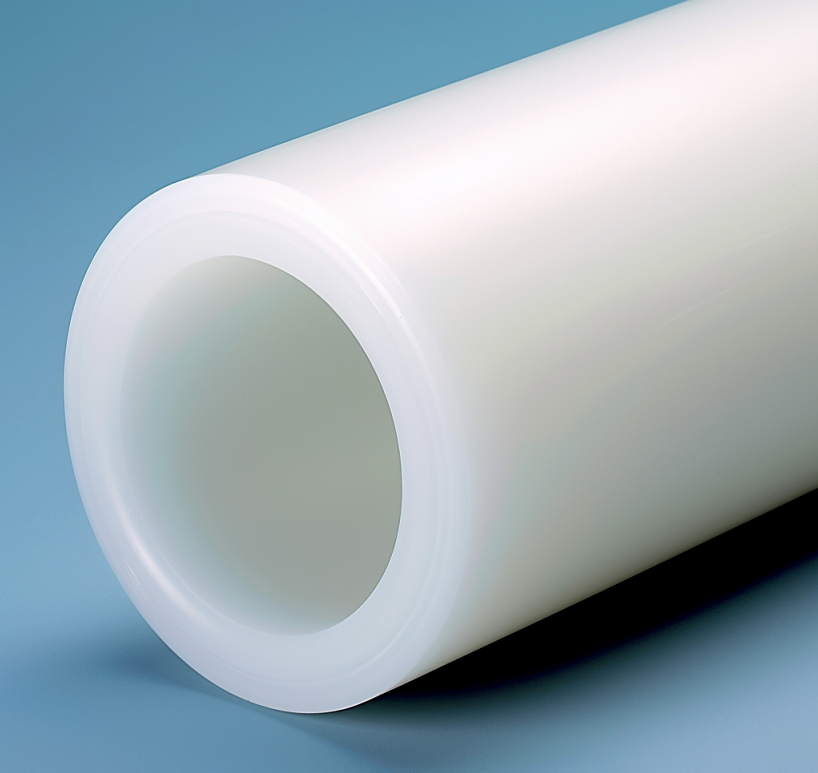
Industrial polyamide profiles, wear strips, and precision-engineered casting stock designed for minimal friction, high structural resilience, and long service lifecycles.



The transition toward smart warehousing, ultra-high-speed bottle sorting, and zero-lubrication manufacturing places intense demands on continuous mechanical conveying interfaces.
In modern industrial automation, the mechanical interface between moving cargo and structural track profiles determines throughput efficiency, acoustic emissions, and preventive maintenance cycles. A Polyamide Block For Conveyor Guide Rails serves as a critical tribological component engineered to eliminate destructive surface-on-surface friction, safeguard sensitive payload surfaces, and absorb destructive dynamic vibrations across high-cadence assembly systems.
Historically, automated handling networks relied on soft metallic liners such as brass or bronze, or rudimentary polyethylene profiles. However, as packaging lines exceed linear velocities of 120 meters per minute and smart sorters operate 24/7 in multi-tiered distribution hubs, legacy materials fail due to rapid thermal softening, surface galling, and high noise generation. Polyamide (PA6, PA66, and Monomer Cast MC Nylon) has decisively emerged as the premier thermoplastic matrix. It delivers an exceptional equilibrium of surface hardness, dry-running lubricity, structural tensile modulus, and continuous impact toughness.
Dynamic friction coefficient down to 0.15 reduces drive motor amp draw across long horizontal conveyors and vertical spiral accumulating elevators.
Cast polyamide exhibits volumetric wear resistance up to 5 times superior to typical polyolefins when resisting abrasive cardboard dust and metal swarf.
Attenuates peak operational noise by 8 to 14 decibels compared to stainless guide rails, ensuring compliance with strict industrial OSHA noise thresholds.
Selecting the precise molecular structure and manufacturing process is crucial for matching line speed, chemical washdown exposure, and compressive loads.
| Polymer Variant | Tensile Strength (MPa) | Coefficient of Friction (Dry) | Heat Deflection Temp (0.45 MPa) | Water Absorption (Saturation) | Primary Conveyor Application |
|---|---|---|---|---|---|
| Extruded PA6 (Natural/Black) | 78 - 85 | 0.22 - 0.28 | 165 °C | 8.5% | General parcel slide rails, standard carton guide brackets, side wear shoes. |
| Extruded PA66 (High Rigidity) | 88 - 95 | 0.20 - 0.25 | 195 °C | 7.8% | High-temperature drying tunnels, beverage shrink-wrap guidance, high lateral thrust rails. |
| Monomer Cast MC Nylon (PA6G) | 90 - 110 | 0.15 - 0.20 | 205 °C | 6.2% | Heavy-duty pallet transfer guide blocks, mining & aggregate hopper chute guides. |
| PA6 + 30% Glass Fiber Reinforced | 140 - 165 | 0.30 - 0.35 | 215 °C | 5.5% | Structural mounting brackets, high-load switch-track guide blocks, anti-flex carriers. |
| Oil-Filled / MoS2 Lubricated Cast Nylon | 80 - 90 | 0.10 - 0.14 | 190 °C | 5.8% | High-speed unlubricated accumulation tracks, aluminum can handling, sterile cleanrooms. |
The physical integrity of a conveyor guide block depends heavily on molecular chain orientation during polymer consolidation. Extrusion molding provides cost-effective, high-uniformity continuous cross-sections ideal for standardized snap-on profiles and linear rail tracks.
Conversely, MC (Monomer Casting) static molding relies on direct anionic polymerization inside customized steel molds. This produces virtually stress-free billets with higher molecular weights, resulting in improved compressive strength, enhanced crystalline density, and exceptional dimensional stability after multi-axis CNC routing.

From cryogenic cold-chain logistics to rigorous chemical bottling environments, explore how custom polyamide guide blocks resolve core operating challenges.
Prevents denting, labeling marring, and metallic contamination on aluminum cans and glass bottles running at up to 1,500 units per minute. Non-staining formulations resist aggressive acidic fruit juices and sanitizing steam.
Absorbs massive repetitive shock loads in cross-belt sorters, vertical shoe diverters, and merge systems. The high dynamic fatigue resistance prevents brittle fracture caused by shifting 50kg package impacts.
Dry-running polyamide profiles eliminate liquid lubricants that harbor microbial growth. Compliant with stringent particulate emission requirements for automated vial handling and robotic syringe filling.
Automotive body-in-white (BIW) transfer lines require heavy-duty guide shoes capable of supporting loads exceeding 1,500 kg per carriage. Standard UHMWPE tends to deform plastically under prolonged clamping and point loading (known as material cold flow or creep). Precision-machined Cast MC Polyamide blocks maintain precise structural dimensions under dynamic clamp forces, preserving micro-millimeter tolerance alignments with robotic welding cells.
Two Decades of Specialized Engineering Plastics Production and Precision Machining Solutions
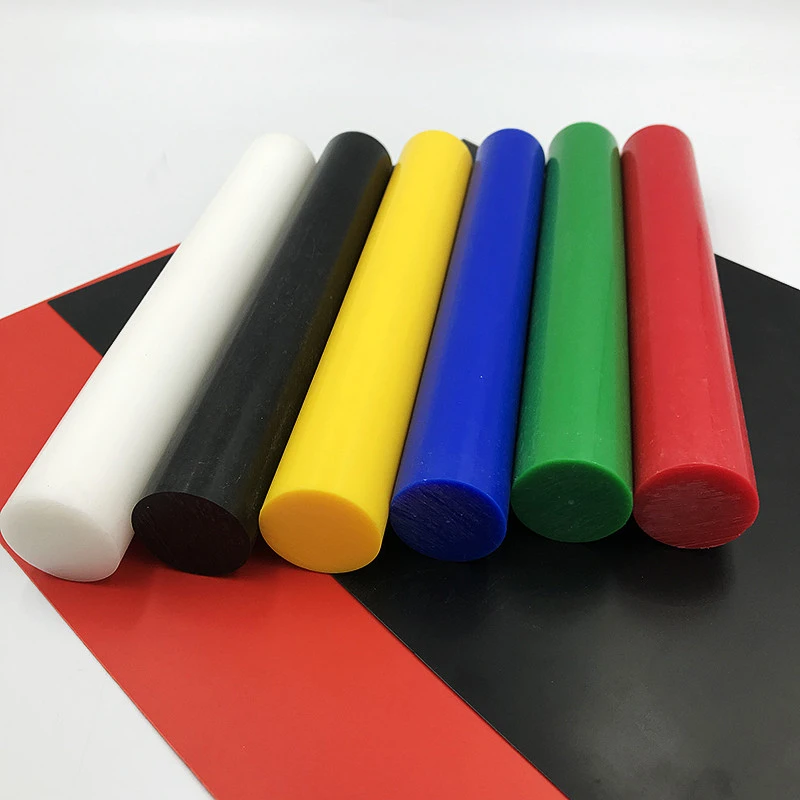
We SHUNDA manufacturer Have 20 Years experience in Nylon Board/Sheet,Nylon Rod,PP Rod, MC Casting Nylon Rod ,Nylon Tube,Nylon Gear,Nylon Pulley ,Nylon Sleeve ,Nylon Pad ,Nylon Ball ,Nylon Flange ,Nylon Chain ,Nylon Connection ,Nylon Stick ,Nylon Screw&Nuts ,Nylon Wheel ,Nylon Fitting ,Etc
The process is roughly divided into: MC static molding, extrusion molding, polymerization molding.
By the way , Acting for the production of POM, PE, PP, PTFE, ABS, PVDF, PET, UHMW-PE, PC, PVC, PMMA and other materials; rods; importing PEEK, PPS, PEI, PSU, PI and other materials.
We insisit on the principle of customers first, quality first, best price and service. And we hope to establish a long-term business relationship with you.
We have strong supply chain channels and perfect product line, which can meet various kinds of customers’ needs.
We have a senior team of designers, super product development capabilities, advanced production technology, professional sales team to provide customers with one-stop service solutions."
Detailed technical answers for machine builders, maintenance directors, and automation engineers.
Polyamides naturally absorb ambient atmospheric humidity (up to 8.5% at total saturation for PA6). This plasticizes the crystalline matrix, slightly expanding dimensions (+0.2% to 0.5%) while increasing impact toughness. For high-humidity washdowns, our engineers calculate counterbore tolerances or specify MoS2-modified Cast MC Nylon with reduced hygroscopic rates.
While UHMW-PE features an exceptionally low friction coefficient, it suffers from poor compressive strength and cold creep under sustained pressure. Polyamide blocks withstand substantially higher lateral thrust, resist deformation under heavy pallet skids, and operate at temperatures up to 105°C continuous, well beyond UHMW-PE's 80°C limit.
Yes. Cast MC nylon and oil-impregnated polyamide formulations feature solid lubricants dispersed uniformly throughout the molecular structure. This creates self-healing dry-running surfaces that release micro-lubricating films during initial break-in, avoiding fluid contamination in sanitary packaging lines.
Use high-speed CNC routing equipment with sharp single-flute or double-flute carbide end mills designed for polymers. Maintain high feed rates to avoid frictional melting, clamp profiles without induced deflection, and perform finish cutting after the stock material has normalized to shop ambient temperature.
Complete selection of precision polyamide engineering stock, custom molded blocks, wear bushings, and high-impact conveyor rail hardware.