High-precision engineering fasteners, structural polymers, and containment components optimized for water storage sealing.


From chemical compatibility to hydrostatic load dispersion, examine how high-performance thermoplastic flange nuts replace metal fasteners in modern fluid reservoirs.
Integrated circular flange architecture distributes axial clamping tension across soft elastomeric O-rings and gaskets, eliminating localized cracking on composite, rotational-molded, or GRP tank walls.
Engineered Polyamides (PA6, PA66) and Polypropylene (PP) withstand continuous exposure to chlorinated potable water, acidic municipal runoff, seawater, and aggressive cleaning chemicals without galvanic corrosion.
Polymeric thread engagement delivers inherent mechanical damping against cyclic pump vibrations and pressure surges, avoiding spontaneous thread back-off without secondary lock washers.
In municipal water storage, commercial rainwater harvesting, chemical dosing plants, and sectional modular GRP water reservoirs, structural connection security is the definitive factor governing leak prevention. For decades, mechanical engineers relied upon conventional brass, stainless steel (AISI 304/316), or galvanized carbon steel nuts to compress bulkhead fittings and pipe flanges against tank walls. However, the presence of dissolved chlorides, stray electrical currents, atmospheric condensation, and chemical disinfectant dosing induces severe galvanic corrosion, stress-corrosion cracking, and galvanic bridging.
The contemporary transition toward precision-molded Plastic Flange Nuts for water tank sealing represents a major paradigm shift in fluid containment architecture. Thermoplastic flange nuts, specifically those formulated from Polyamide (PA66, PA6, MC Cast Nylon), Polypropylene (PP), Polyoxymethylene (POM), and Polyvinylidene Fluoride (PVDF), eliminate electrolytic rust entirely. Furthermore, global regulatory initiatives including NSF/ANSI Standard 61 for drinking water components and the European WRAS guidelines demand non-leaching, toxicologically inert fasteners that do not release heavy metals (such as lead or nickel) into potable water reserves over decades of continuous submersion.
The operational reliability of a water tank through-wall connection or panel seam relies on achieving uniform compressive stress across the elastomeric seal (typically EPDM, NBR, Viton, or closed-cell Neoprene). When standard hex nuts are utilized without broad load washers, clamping force concentrates within a small radial footprint immediately adjacent to the bolt clearance hole. This focal pressure over-compresses the gasket locally, inducing elastomer extrusions or tears while leaving adjacent radial perimeters under-compressed, culminating in slow capillary weepage under continuous hydrostatic head pressure.
Plastic Flange Nuts integrate a wide, precision-engineered washer face directly into the hexagonal body. When tightened onto male studs or bulkhead pipe fittings, the enlarged bearing surface distributes tightening torque across an area up to 250% broader than a standard nut. This ensures that the sealing gasket experiences uniform axial deflection across its entire contact geometry. Additionally, engineered polymers exhibit viscoelastic compliance: under initial tightening, micro-deformations at the thread interface and flange base absorb surface irregularities in the rotational-molded polyethylene or fiberglass tank wall, establishing a hydraulic seal that remains gas-tight and liquid-impermeable under both positive dynamic pressures and negative siphon conditions.
Selecting the optimal thermoplastic material formulation requires balancing tensile yield strength, moisture absorption kinetics, thermal expansion, and environmental stress cracking resistance (ESCR). Below is an engineering comparison of the primary polymer grades utilized in our advanced manufacturing processes:
| Engineering Material | Tensile Strength (MPa) | Water Absorption (24h %) | Continuous Operating Temp (°C) | Key Chemical Resistance | Recommended Tank Environment |
|---|---|---|---|---|---|
| Polyamide 66 (PA66) | 75 - 85 | 1.2% - 1.5% | -40°C to +105°C | Hydrocarbons, oils, weak bases, chlorinated water | Modular GRP panel water tanks, structural bulkheads |
| MC Cast Nylon (Monomer Cast) | 80 - 95 | 0.8% - 1.0% | -40°C to +120°C | High impact, cyclic fatigue, wear, hydraulic fluids | Heavy municipal reservoirs, large-diameter intake flanges |
| Polypropylene (PP-H) | 30 - 38 | < 0.02% | 0°C to +90°C | Strong mineral acids, alkalis, aqueous salt solutions | Chemical dosing vessels, wastewater neutralization tanks |
| Polyoxymethylene (POM / Acetal) | 65 - 72 | 0.2% - 0.25% | -40°C to +90°C | Dimensional stability, moisture resistance, solvents | Precision valve interfaces, metering tank through-wall ports |
| PVDF (Fluoropolymer) | 50 - 55 | < 0.04% | -30°C to +140°C | Ultra-pure water, ozone, nitric acid, UV degradation | Semiconductor DI water tanks, pharmaceutical storage |
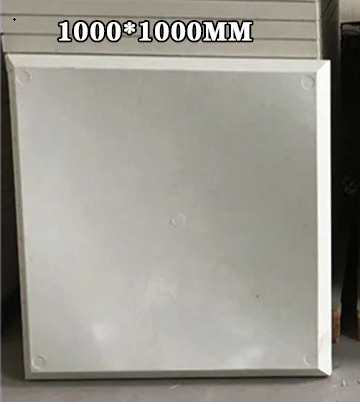
A. Sectional Modular GRP/SMC Potable Water Tanks: Prefabricated modular water tanks assembled from 1x1 meter Glass-Reinforced Plastic panels require hundreds of perimeter bolts and flange connectors. Plastic flange nuts prevent stress fractures in the brittle GRP composite flange corners, absorbing thermal contraction during night-day seasonal swings without backing off or cracking the panel matrix.
B. Agricultural Irrigation & Liquid Fertilizer Containment: Polyethylene liquid fertilizer tanks store concentrated ammonium nitrate, phosphoric acid, and potassium mixtures. Traditional metallic nuts corrode rapidly under fertilizer vapor exposure, causing cataclysmic gasket blowout. Chemically resistant PP and Nylon flange nuts preserve thread engagement and gasket compression indefinitely.
C. Marine, Offshore & Coastal Desalination Reservoirs: Sea spray contains aggressive sodium chloride ions that corrode even grade 316 stainless steel through crevice pitting under submerged washers. Specialized engineering plastic flange fasteners guarantee decades of zero-maintenance operation in offshore reverse osmosis (RO) permeate tanks and ballast water systems.
D. Fire Suppression & Emergency Water Holding: Seismic events and pump start-up shockwaves induce high-frequency harmonic vibrations throughout fire water piping. Polymeric threads possess an intrinsic loss factor that attenuates resonance, ensuring critical suction flange seals remain locked and drip-free under emergency high-flow conditions.
Unlike steel fasteners which are torqued until yield strain occurs in the bolt shank, the installation of plastic flange nuts requires precise torque-limiting control to preserve both the polymeric thread flanks and the elastomeric seal. Over-torquing plastic nuts can induce thread shearing or premature viscoelastic tensile creep. Our technical application engineering team recommends adhering to the following protocol:
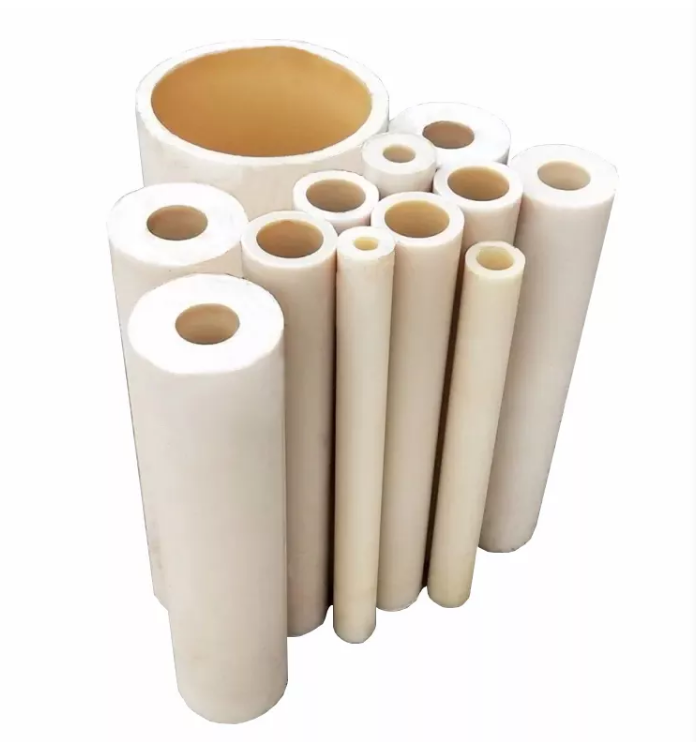
We SHUNDA manufacturer Have 20 Years experience in Nylon Board/Sheet, Nylon Rod, PP Rod, MC Casting Nylon Rod, Nylon Tube, Nylon Gear, Nylon Pulley, Nylon Sleeve, Nylon Pad, Nylon Ball, Nylon Flange, Nylon Chain, Nylon Connection, Nylon Stick, Nylon Screw&Nuts, Nylon Wheel, Nylon Fitting, Etc.
The process is roughly divided into: MC static molding, extrusion molding, polymerization molding.
By the way, Acting for the production of POM, PE, PP, PTFE, ABS, PVDF, PET, UHMW-PE, PC, PVC, PMMA and other materials; rods; importing PEEK, PPS, PEI, PSU, PI and other materials. We insist on the principle of customers first, quality first, best price and service. And we hope to establish a long-term business relationship with you. We have strong supply chain channels and perfect product line, which can meet various kinds of customers' needs. We have a senior team of designers, super product development capabilities, advanced production technology, professional sales team to provide customers with one-stop service solutions.


Explore all 8 specialized products and raw materials engineered for water sealing, industrial mechanical transmission, and fluid containment.