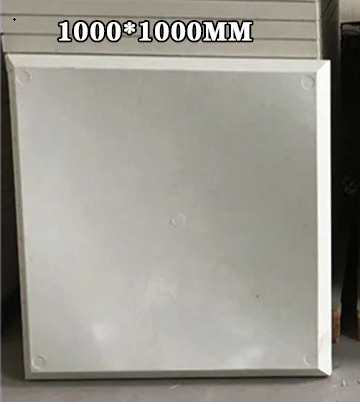
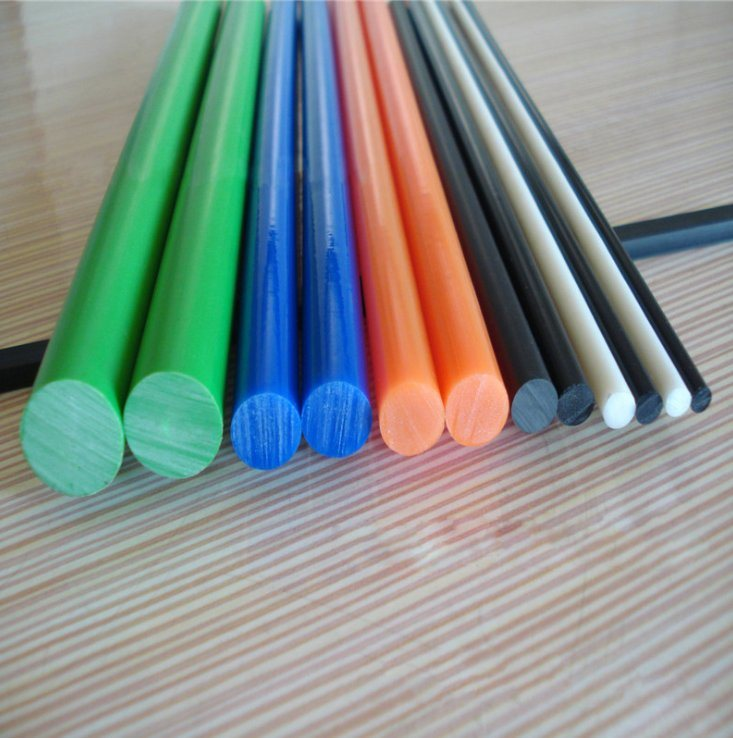
High-rigidity glass-reinforced nylon stock shapes and custom geometries optimized for severe industrial fluid handling and zero-leakage shaft seals.


Standard unfilled polymers face deformation under extreme hydrodynamic pressure. Glass filled nylon sheets (PA6-GF30 / PA66-GF30) merge structural matrix stability with self-lubricating wear resistance.
30% E-glass reinforcement raises tensile modulus over 8,500 MPa, preventing compressive creeping and face distortion under sustained hydraulic clamp pressure.
Heat Deflection Temperature exceeds 200°C under 1.8 MPa mechanical stress, preventing dynamic thermal galling and thermal runaway in high-speed rotary pump sealing faces.
Engineered Pressure-Velocity capacity withstands continuous friction against stainless steel, ceramic, and silicon carbide counter-faces without microscopic adhesion.
The transition from heavy metallic alloys to high-performance fiber-reinforced polyamides is redefining fluid containment across process industries.
In modern industrial fluid handling, mechanical seal failure represents one of the most frequent causes of unplanned machinery downtime, resulting in millions of dollars in process interruptions and containment hazards. Traditionally, mechanical seal components—such as seal gland rings, backing plates, mating ring adaptors, throttle bushings, and wear bands—were machined from austenitic stainless steels (AISI 316L), bronze, or phosphor bronze alloys. However, modern process chemistry, corrosive saline media, and demanding cyclic temperature variations have pushed metallic seals to their operational thresholds due to galvanic corrosion, high rotational inertia, and galling under dry-run conditions.
To overcome these engineering limitations, industrial pump designers and mechanical seal manufacturers have increasingly transitioned toward Glass Filled Nylon Board (specifically PA6-GF30 and PA66-GF30). Incorporating chemically coupled, micro-engineered chopped E-glass fibers into polyamide matrices drastically alters the mechanical and thermal dynamics of the material. Tensile strength jumps from approximately 75 MPa in virgin nylon to more than 165 MPa in 30% glass-filled configurations, while the coefficient of linear thermal expansion (CLTE) drops by nearly 65%, bringing it remarkably close to non-ferrous alloys.
The global mechanical seals and industrial sealing materials market is expanding rapidly, propelled by stringent environmental regulations on volatile organic compound (VOC) emissions, aggressive wastewater recycling initiatives, and the rapid expansion of offshore petrochemical refining. In these environments, seal assemblies are subject to extreme operational pressures, ranging from vacuum conditions up to several tens of megapascals.
Unreinforced polymers such as virgin PTFE, standard polyoxymethylene (POM), or pure PA6 tend to suffer from cold flow (creep) when subjected to high compressive loads over extended operational intervals. Once an unreinforced polymer creeps, torque preload on seal gland bolts relaxes, compromising face flatness and precipitating catastrophic leakage. Glass filled nylon boards resolve this engineering challenge by maintaining strict dimensional integrity, flat face parallelism under load, and outstanding fatigue endurance.

Selecting the appropriate sealing matrix requires an evaluation of tensile modulus, thermal resistance, friction coefficient, and long-term creep modulus. The table below illustrates why 30% Glass Filled Nylon Sheet/Board stands out as an optimal mechanical seal material compared to conventional alternatives:
| Material Specification | Virgin Nylon 6 (Cast) | PA66 + 30% Glass Filled (GF30) | Virgin PTFE | Phosphor Bronze (C51000) |
|---|---|---|---|---|
| Density (g/cm³) | 1.15 | 1.36 | 2.18 | 8.86 |
| Tensile Strength (MPa) | 80 | 175 | 28 | 420 |
| Tensile Modulus (MPa) | 3,200 | 8,900 | 600 | 115,000 |
| Heat Deflection Temp (1.8 MPa, °C) | 75 | 215 | 55 | > 300 |
| Thermal Expansion (10⁻⁵/K) | 9.0 | 3.2 | 14.0 | 1.8 |
| Corrosion in Aqueous Salts | Excellent | Immune | Inert | Moderate Oxidation |
| Dry Running Resistance | Good | Excellent (Low Wear) | Outstanding | Prone to Galling |
Engineered components machined from glass filled nylon board deliver reliable, zero-leakage performance across severe industrial scenarios.
In mineral processing, desulfurization units, and dredging pumps, abrasive particulate slurries rapidly erode soft elastomers and score stainless steel sleeves. Glass filled nylon throat bushings and restriction bushes create an effective pressure breakdown zone ahead of the mechanical seal faces. The high surface hardness, combined with the glass fiber interlocking matrix, resists solid particle erosion and cavitation while sustaining the necessary hydrodynamic barrier.
Hydraulic cylinders operating in heavy mobile machinery, offshore cranes, and forging presses encounter burst pressures exceeding 350 bar. Elastomeric primary seals (nitrile, Viton) risk extrusion into the clearance gap between the piston and cylinder barrel. Anti-extrusion backup rings machined from PA66-GF30 board prevent elastomeric nibbling and extrusion failure, even during wide radial gap excursions under high sideloads.
Chemical batch reactors and pharmaceutical mixing vessels experience severe cantilever shaft runout. Using metallic seal gland housings often leads to metal-to-metal rubbing and spark hazards if the rotating shaft deflects. Glass filled nylon gland plates and centering rings provide non-sparking electrical insulation, high chemical resistance against solvents and hydrocarbons, and damping properties that absorb dynamic shaft vibration.
Subsea and marine propulsion shaft assemblies operate under continuous immersion in aggressive electrolytic seawater. Glass filled polyamide sealing rings and bearing pads completely eliminate the electrolytic cell reaction that degrades bronze-to-steel assemblies. The material remains unaffected by micro-biological fouling and lubricates effectively with raw water, preventing shaft scoring during prolonged voyages.
The operational success of glass filled nylon board in mechanical sealing is governed by the micromechanics of its composite architecture. During extrusion or cast polymerization, chopped silane-treated E-glass fibers (typically 10 to 15 microns in diameter with an aspect ratio of 20:1 to 30:1) are uniformly distributed throughout the polyamide matrix. The silane coupling agent establishes covalent chemical bonding between the inorganic silica surfaces and the polar amide groups of the nylon chains.
When an engineered seal face machined from glass filled nylon engages in dynamic contact with a rotating counter-face (such as hardened chrome steel or ceramic), the polymer matrix wears back microscopically during initial run-in. This exposes the polished tips of the glass fibers, which carry the bulk of the contact load. Concurrently, microscopic polymer transfer films deposit onto the counter-face asperities, establishing a stable, low-friction tribological boundary. This tribofilm reduces the dynamic coefficient of friction to values as low as 0.18–0.24, minimizing frictional heat buildup and preventing thermal blistering.
Achieving mechanical seal face flatness within helium light band tolerances demands specialized casting, controlled annealing, and precision CNC turning.
Because mechanical seals require exceptional flatness—often measured in helium light bands (0.3 µm)—any internal stress within the nylon board will result in post-machining warpage and leakage. At SHUNDA, thick glass filled nylon boards undergo multi-stage thermal annealing cycles. Plates are slowly brought to temperatures near their crystallization threshold in inert environments, held for up to 36 hours, and gradually cooled.
This strict thermal cycle relieves internal molding stresses, completes crystalline matrix organization, and guarantees zero post-machining distortion when parts are parted off or grooved on precision multi-axis CNC lathes.

Over two decades of dedication to polymer innovation, advanced static casting, and worldwide industrial supply chain excellence.
We SHUNDA manufacturer Have 20 Years experience in Nylon Board/Sheet,Nylon Rod,PP Rod, MC Casting Nylon Rod ,Nylon Tube,Nylon Gear,Nylon Pulley ,Nylon Sleeve ,Nylon Pad ,Nylon Ball ,Nylon Flange ,Nylon Chain ,Nylon Connection ,Nylon Stick ,Nylon Screw&Nuts ,Nylon Wheel ,Nylon Fitting ,Etc
The process is roughly divided into: MC static molding, extrusion molding, polymerization molding.
By the way , Acting for the production of POM, PE, PP, PTFE, ABS, PVDF, PET, UHMW-PE, PC, PVC, PMMA and other materials; rods; importing PEEK, PPS, PEI, PSU, PI and other materials.
We insisit on the principle of customers first, quality first, best price and service. And we hope to establish a long-term business relationship with you.
We have strong supply chain channels and perfect product line, which can meet various kinds of customers’ needs.
We have a senior team of designers, super product development capabilities, advanced production technology, professional sales team to provide customers with one-stop service solutions.
Leverage our twenty years of polymer engineering experience for your custom seal geometries, extruded profiles, and cast sheets.
Our Products & Catalog ➜Browse our complete catalog of industrial nylon sheets, rods, wear-resistant spherical balls, and specialized polymeric fluid management systems.