Engineered to support cleanroom automation, subsea robotics, and industrial production lines across Tuas, Jurong Island, and Woodlands.
Singapore stands as Southeast Asia’s epicenter for advanced semiconductor manufacturing, aerospace MRO, marine engineering, and smart automation.
Within Singapore's wafer fabrication hubs, engineered polyamide blocks provide clean dimensional stability, low outgassing properties, and electrical insulation essential for wafer handling equipment, carrier tracks, and robotic vacuum fixtures without chemical cross-contamination.
Operating around Jurong Port and shipyards, components require resistance against saline corrosion and heavy wave impact. Our cast nylon and PA6G blocks replace bronze bushings, sheave wheels, mooring rollers, and subsea insulation pads with zero grease wash-off.
As factories transition toward Smart Industry Readiness Index (SIRI) standards, lightweight high-tensile polyamide blocks reduce inertial mass in automated pick-and-place robots, automated guided vehicles (AGVs), and high-speed multi-axis sorting conveyors.
The engineering plastics industry in Singapore is rapidly shifting towards metal-to-plastic conversion. Manufacturers are leveraging advanced polyamide polymer blends to replace heavy, expensive alloys like brass, bronze, and stainless steel in corrosive industrial environments.
Key technological advancements include:
✔ Oil-Filled & Self-Lubricating Cast Nylon: Drastically cuts friction coefficients by up to 50%, eliminating external maintenance lubrication in food packaging and logistics distribution networks across Changi and Jurong.
✔ MoS2 & Glass-Fiber Reinforced Blocks: Enhanced mechanical stiffness, increased compressive strength, and higher continuous heat-deflection ratings up to 160°C for demanding aerospace machining jigs.
✔ AI-Driven CNC Milling & Closed Loop Tolerancing: Precise thermal stress-relieved Annealing ensures our polyamide blocks achieve micro-inch precision without warping during 5-axis CNC machining.
Singapore’s Green Plan 2030 prioritizes resource resilience and low carbon emissions. Our high-efficiency monomer casting (MC) processes produce near-net shapes that reduce machining waste by 35%. Furthermore, industrial polyamide blocks feature long wear lifespans, cutting down equipment replacements and life-cycle carbon footprints in petrochemical and chemical refining operations across Jurong Island.
Your Direct Supplier & Global Manufacturing Partner for High-Performance Engineering Plastics.
We SHUNDA manufacturer Have 20 Years experience in Nylon Board/Sheet,Nylon Rod,PP Rod, MC Casting Nylon Rod ,Nylon Tube,Nylon Gear,Nylon Pulley ,Nylon Sleeve ,Nylon Pad ,Nylon Ball ,Nylon Flange ,Nylon Chain ,Nylon Connection ,Nylon Stick ,Nylon Screw&Nuts ,Nylon Wheel ,Nylon Fitting ,Etc
The process is roughly divided into: MC static molding, extrusion molding, polymerization molding.
By the way , Acting for the production of POM, PE, PP, PTFE, ABS, PVDF, PET, UHMW-PE, PC, PVC, PMMA and other materials; rods; importing PEEK, PPS, PEI, PSU, PI and other materials.
We insisit on the principle of customers first, quality first, best price and service. And we hope to establish a long-term business relationship with you.
We have strong supply chain channels and perfect product line, which can meet various kinds of customers’ needs.
We have a senior team of designers, super product development capabilities, advanced production technology, professional sales team to provide customers with one-stop service solutions."


Shunda Mission: Creative design, high quality products, Best Service, Shunda will be your best Choice.
Explore our complete range of raw extruded boards, casting nylon slabs, custom machined hardware, and components for immediate Singapore dispatch.


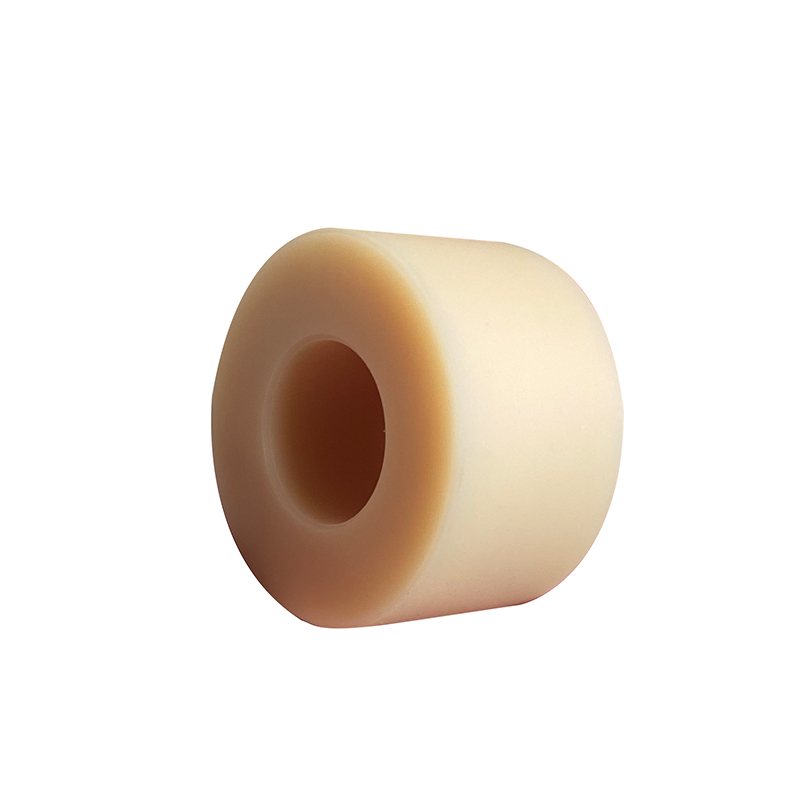
Key mechanical, thermal, and electrical metrics engineered into our polyamide materials for Singapore's rigorous industrial applications.
Boasting a tensile yield strength of 80 to 95 MPa and exceptional izod impact resistance, our polyamide blocks withstand dynamic mechanical shocks, high cycle vibration, and abrasive stresses without micro-cracking.
Continuous service temperature ranges comfortably from -40°C up to +110°C (up to +160°C for heat-stabilized or glass-filled variants), maintaining structural cohesion under demanding machine casing and engine bay operations.
Impervious to hydrocarbons, hydraulic oils, fuels, brake fluids, and industrial ketones. Exhibits outstanding sliding friction wear rates (k-factor) against steel and aluminum mating surfaces without galling or binding.