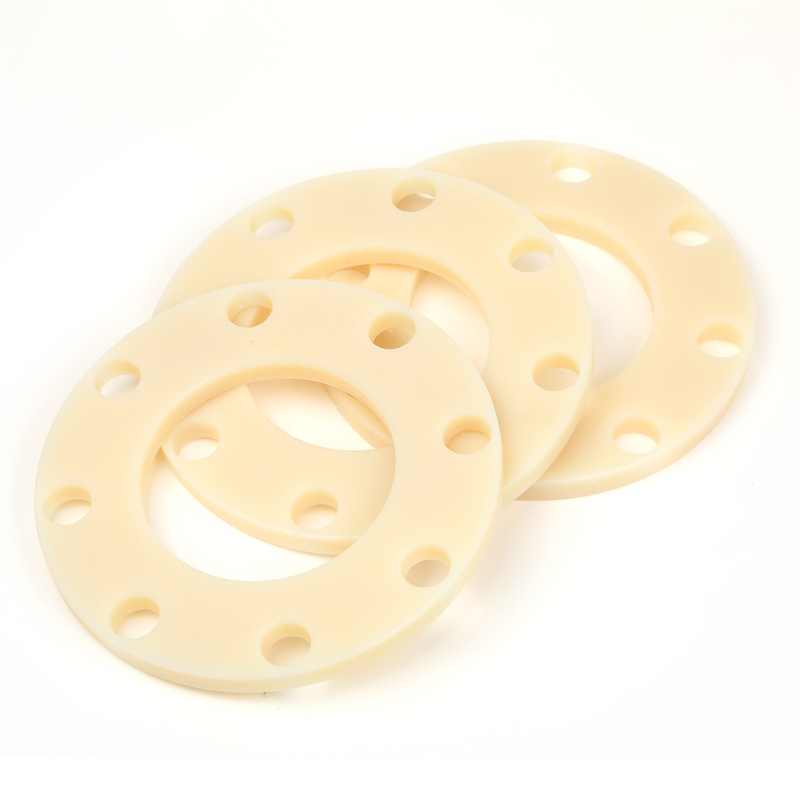
Explore core polymer grades optimized for heavy-load hydraulic barriers, custom sealing spacers, and precision-machined tank joint fittings.


In modern municipal, industrial, and commercial containment engineering, structural water tank sealing is undergoing an epochal transition. For decades, water containment installations relied almost entirely on traditional elastomer seals, EPDM gaskets, and bitumen-based mastics. While these soft compounds offer immediate compliance, they inherently suffer from long-term compressive creep, accelerated UV breakdown, anaerobic biological degradation, and devastating plasticizer migration under sustained hydrostatic heads.
The introduction of rigid and semi-rigid Polyamide Blocks (PA6, PA66, and Monomer Cast MC Nylon) has radically redefined joint safety thresholds in sectional GRP (Glass Reinforced Plastic), hot-dipped galvanized steel, and modular stainless steel water tanks. Polyamide blocks function as rigid load-bearing compression buffers and hydraulic arrestors. Installed at high-stress intersection points, flange tie-rod interfaces, and structural corner joints, these blocks provide a calibrated, non-yielding dimensional foundation that prevents gasket over-compression, eliminates panel deformation, and maintains hermetic water tightness over decades of continuous operational stress.
Today, infrastructure projects certified under international standards such as BS EN 13280, AWWA D103, and NFPA 22 mandate sealing components that exhibit minimal creep under continuous hydraulic loads exceeding 2.5 MPa. Polyamide blocks, characterized by crystalline molecular alignment and exceptional flexural moduli, deliver the exact structural rigidity necessary to withstand intense dynamic hydraulic sloshing, seismic ground displacement, and severe seasonal thermal cycling.

Evaluating the key mechanical and chemical mechanisms that make polyamide blocks the pinnacle choice for high-pressure fluid containment.
Polyamides withstand persistent hydrostatic pressures exceeding 80 MPa without irreversible plastic deformation. This preserves gasket pre-compression torque on clamping bolts throughout multi-decade tank lifespans.
While polyamides absorb microscopic ambient moisture, conditioned MC cast polyamide blocks reach a dimensional equilibrium that increases material toughness and dynamic impact absorption without sacrificing joint sealing tolerances.
Polyamide structures demonstrate exceptional resistance to chlorinated drinking water, fluoridated streams, biocidal sanitation agents, and aggressive industrial effluents spanning pH levels from 4.0 to 11.5.
Precision-engineered polyamide blocks are deployed not as cosmetic spacers, but as mission-critical load-bearing sealing elements across diverse hydraulic architectures. The structural role of a polyamide block varies dramatically depending on the mechanical geometry, operating temperature, and containment chemistry of the water storage asset:
Sectional GRP water tanks rely on bolted modular panels where four corners intersect at a single point (the four-panel cross-junction). This focal junction is notorious for micro-gaps and localized shear stresses during hydraulic filling cycles. Precision CNC-machined polyamide corner sealing blocks are engineered with custom radiused rebates to fit flush within the joint apex. They act as uniform force distributors, preventing localized torque concentration that could crack composite panels while sandwiching secondary elastomeric profiles to guarantee a leak-free hydrostatic seal.
Potable water infrastructure demands materials that maintain water purity without leaching harmful volatile organic compounds (VOCs), phthalates, or heavy metals. Custom-cast polyamide blocks comply rigorously with global hygiene codes (including WRAS, NSF/ANSI 61, and FDA standards). They serve as perimeter sealing anchors, internal tie-rod junction isolators, and baffle-wall seating blocks in multimillion-gallon municipal reservoirs, offering non-toxic performance impervious to continuous free chlorine residual sanitation.
Dedicated fire water storage tanks must maintain structural integrity and zero water loss over years of static dormancy, followed by sudden high-rate turbulent suction when emergency deluge pumps activate. Polyamide sealing blocks resist high-frequency suction cavitation and dynamic pressure drops, ensuring that flange connections, suction nozzles, and base-to-wall interfaces maintain seal compression under violent hydraulic surges.
Chilled water stratified tanks and hot thermal energy storage (TES) systems experience continuous cyclic thermal expansion and contraction. Conventional rubber seals rapidly suffer from thermal hardening and compression set under cyclic swings between 4°C and 90°C. Specially formulated heat-stabilized Polyamide 66 (PA66) blocks retain structural elasticity, dampening differential expansion between metal containment shells and internal distribution diffusers.
| Performance Criterion | MC Cast Polyamide (Nylon) | Extruded PA66 | Standard EPDM Gasket | PTFE (Fluoropolymer) | Structural Stainless 316 |
|---|---|---|---|---|---|
| Compressive Yield Strength | 95 - 110 MPa | 85 - 100 MPa | < 8 MPa (Soft) | 12 - 18 MPa | > 220 MPa |
| Long-Term Creep Resistance | Outstanding | High | Poor (High Creep) | Very Low (Cold Flow) | Immune |
| Gasket Over-compression Prevention | Optimal Foundation | Optimal Foundation | N/A (Compressible) | Fair (Distorts) | Risk of Panel Pinching |
| Corrosion & Electrolysis Hazard | Zero (Dielectric) | Zero (Dielectric) | Zero | Zero | Galvanic Risk with GRP Steel |
| Machinability to Custom Tolerances | ± 0.02 mm (CNC) | ± 0.05 mm | Molded Only | ± 0.08 mm | High Cost / Tool Wear |
Achieving sub-millimeter sealing tolerances across large-format industrial containment vessels requires modern digital manufacturing protocols. At our production facilities, the manufacturing of Polyamide Sealing Blocks integrates AI-driven casting parameters, closed-loop thermal regulation, and high-speed multi-axis CNC milling setups.
During the Monomer Casting (MC) process, caprolactam is polymerized directly inside calibrated mold cavities using specialized alkaline catalysts and dynamic activators. By implementing AI sensor loops that monitor exothermic polymerization temperatures and internal crystallization kinetics in real time, void formation and microscopic shrinkage cavities are completely eliminated from the interior core of heavy nylon blocks. The result is a highly isotropic semi-crystalline structure that delivers uniform mechanical load support in all orthogonal axes.
Following raw block stabilization, automated 5-axis CNC machining centers finish complex rebate steps, O-ring groove channels, chamfers, and bolt clearance holes. Machine learning toolpath optimization algorithms adapt cutting spindle speeds to material temperatures, eliminating surface micro-tearing and achieving seal interface finishes with an ultra-smooth roughness index of Ra ≤ 0.8 μm. This superior surface finish ensures that secondary rubber or mastic coatings achieve 100% surface contact, forming an impenetrable barrier against capillary fluid seepage under sustained pressure.
Two decades of manufacturing leadership in custom casting, precision extrusion, and engineering polymers.
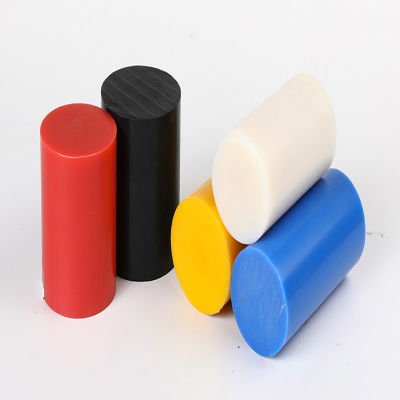
We SHUNDA manufacturer have 20 Years of experience in Nylon Board/Sheet, Nylon Rod, PP Rod, MC Casting Nylon Rod, Nylon Tube, Nylon Gear, Nylon Pulley, Nylon Sleeve, Nylon Pad, Nylon Ball, Nylon Flange, Nylon Chain, Nylon Connection, Nylon Stick, Nylon Screw&Nuts, Nylon Wheel, Nylon Fitting, and custom sealing profiles.
Our core manufacturing processes are roughly divided into: MC static molding, extrusion molding, and polymerization molding.
Furthermore, acting for the production and precision processing of POM, PE, PP, PTFE, ABS, PVDF, PET, UHMW-PE, PC, PVC, PMMA, and other stock shapes; rods; importing ultra-high performance polymers including PEEK, PPS, PEI, PSU, PI, and advanced composite materials.
We insist on the principle of "Customers first, quality first, best price and service." And we hope to establish a long-term business relationship with you. We possess strong supply chain channels and a perfect product line, engineered to meet various kinds of customer requirements. We have a senior team of designers, super product development capabilities, advanced production technology, and a professional sales team to provide customers with dependable one-stop service solutions.
State-of-the-art polymer casting lines, automated CNC machine shops, and rigorous testing facilities.


Comprehensive technical shapes, machined parts, and raw stock options for water management and heavy industrial engineering.