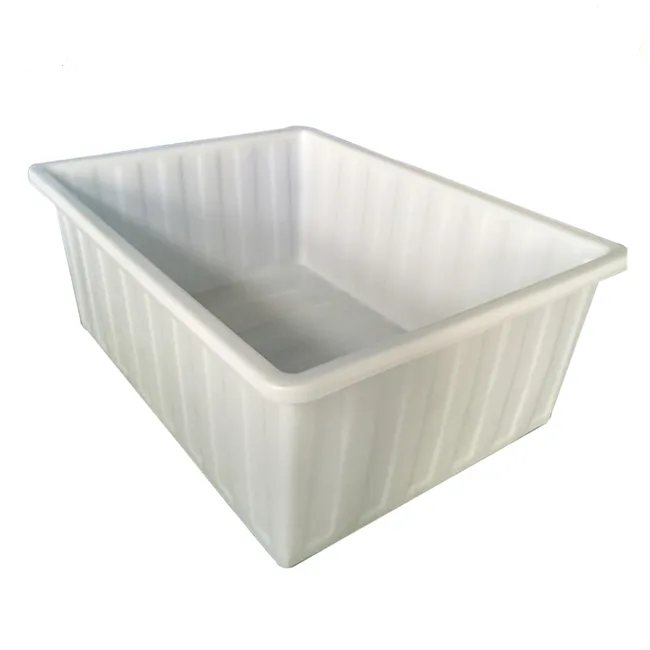
Standard and custom-engineered thermoplastic and cast polymer tubular components optimized for high-temperature acid, alkaline, and solvent containment.


Technological advancement, material science, and modern structural containment dynamics in chemical processing environments.
Unlike fabricated rectangular liners with edge stress concentrations, round tubes evenly distribute hydrostatic fluid head pressures, eliminating weld fatigue in deep storage sumps and reaction wells.
State-of-the-art semi-crystalline polymers minimize microscopic void volumes, mitigating volatile chemical migration and environmental stress cracking (ESC) caused by strong oxidizers and ketones.
Specialty modified polyamides, fluoropolymers, and polypropylene retain their mechanical modulus and tensile elongation throughout severe thermal cycling ranging from -40°C up to +140°C.
Modern chemical processing, semiconductor etching, lithium-ion battery slurry production, and metal finishing industries demand unprecedented levels of containment safety, fluid purity, and asset life-cycles. Traditional metal storage tanks fabricated from carbon steel or standard 316L stainless steel increasingly fall short when exposed to concentrated hydrochloric acid (HCl), hydrofluoric acid (HF), sulfuric acid blends, and volatile aromatic hydrocarbons. While exotic alloys such as Hastelloy C-276 or Titanium Grade 2 offer chemical resilience, their exorbitant capital costs and vulnerability to localized pitting or stress corrosion cracking have accelerated the market transition toward advanced polymeric lining architectures.
Within this industrial landscape, plastic round tubes for chemical storage liners serve a dual functional purpose: acting both as full cylindrical barrier liners within external structural shells (such as carbon steel, FRP, or concrete outer encasements) and as specialized interior components including deep immersion dip tubes, agitator sleeves, level measurement columns, suction wells, and internal heating/cooling conduit loops. The seamless tubular geometry provides superior structural strength against buckling, pressure differentials, and continuous liquid hydrodynamic agitation.
Selecting the optimal thermoplastic or cast polymer resin depends on continuous operating temperatures, chemical concentration, mechanical shear forces, and permeation characteristics. Below is an engineering evaluation across standard industrial polymers deployed in tubular chemical containment:
| Polymer Class | Key Material Types | Tensile Yield (MPa) | Max Service Temp (°C) | Chemical Suitability & Application Scope |
|---|---|---|---|---|
| Polyolefins | PP-H, HDPE, UHMW-PE | 25 – 38 | 80 – 100 | Caustic soda, dilute inorganic acids, saline solutions, water treatment sumps. Low cost, exceptional impact resistance. |
| Polyamides | PA6, PA66, MC Cast Nylon | 70 – 110 | 105 – 130 | Hydrocarbons, organic solvents, mineral oils, abrasive slurries. Outstanding mechanical rigidity and wear life. |
| Fluoropolymers | PTFE, PVDF, PFA | 20 – 55 | 150 – 260 | Ultra-pure semiconductor reagents, hot concentrated sulfuric acid, nitric acid, Aqua Regia, chlorinated solvents. |
| High-Temp Engineering | PEEK, PPS, PEI | 90 – 140 | 220 – 260 | Critical autoclave liners, petrochemical downhole liners, aggressive catalyst mixing vessels. |
The transition from sheet-welded liner fabrication to continuous extruded or cast round tubes is driven by catastrophic failure prevention. The primary vulnerability in chemical storage vessel liners lies along the longitudinal and circumferential fusion welds. In thermal cycling and high hydrostatic pressure environments, welding seams often experience:
Utilizing high-diameter seamless round plastic tubes eliminates continuous longitudinal welds entirely, providing uniform circumferential hoop stress mitigation (Barlow's formula compliance) and ensuring uniform thermal expansion properties along both axial and radial planes.
Depending on the diameter, wall thickness, and polymer properties, plastic round tubes are manufactured via distinct thermoforming techniques:
Monomer Casting (MC Static & Centrifugal Molding): Particularly effective for large-diameter polyamide round tubes. By polymerizing caprolactam monomer directly within heated cylindrical molds under controlled atmospheric conditions, MC Nylon develops a significantly higher molecular weight, superior crystallinity, and virtually zero residual processing stress compared to standard extrusion. This yields exceptional dimensional precision for internal liner column structures and heavy-duty structural pipe rings.
Continuous Profile Extrusion: Standard methodology for PP, HDPE, and fluoropolymer tubing. Advanced multi-layer co-extrusion technology enables specialized functional barriers, such as a chemically inert virgin fluoropolymer inner core married to an economical, UV-stabilized polyolefin outer layer.
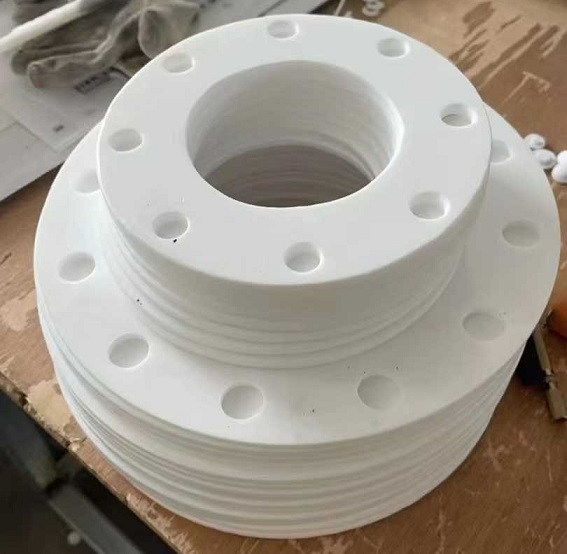
Precision CNC Turning & Finishing: Thick-walled tubes are precision-machined to incorporate integral sealing flanged faces, O-ring groove geometries, and bayonet locking mechanisms for secure integration into chemical tanks without requiring secondary welding.
In the manufacture of silicon wafers, process tanks hold ultra-pure deionized water, hydrogen peroxide blends, and aggressive etchants (SC1, SC2, and buffered oxide etchants). Plastic round tubes manufactured from high-purity virgin PVDF and PTFE are deployed as liner jackets and transfer risers. Their ultra-smooth inner walls minimize particulate retention and ionic leaching, safeguarding parts-per-trillion (ppt) chemical purity metrics.
Hot sulfuric (15-20%) and hydrochloric (10-15%) pickling solutions operate between 60°C and 85°C. Steel vessels lined with thick-walled polypropylene and nylon round tubes prevent acid vapor corrosion of structural members. Heavy-wall plastic sleeves and guide tubes shield heating coils, submersible level sensors, and fluid agitation air spargers from continuous chemical attack.
In dual-laminate tank fabrication (thermoplastic inner liner bonded to an outer FRP structural laminate), cylindrical round tubes serve as seamless inner liners for vertical column vessels, scrubbers, and storage towers. The round geometry facilitates uniform vacuum bonding, eliminating the risk of liner collapse under negative pressure conditions caused by rapid cooling or sudden pump drainage.
The industrial storage liner sector is rapidly evolving through smart sensor integration and nano-engineered polymer compounds:
20 years of precision polymer casting, extrusion, and custom engineering plastic component fabrication.
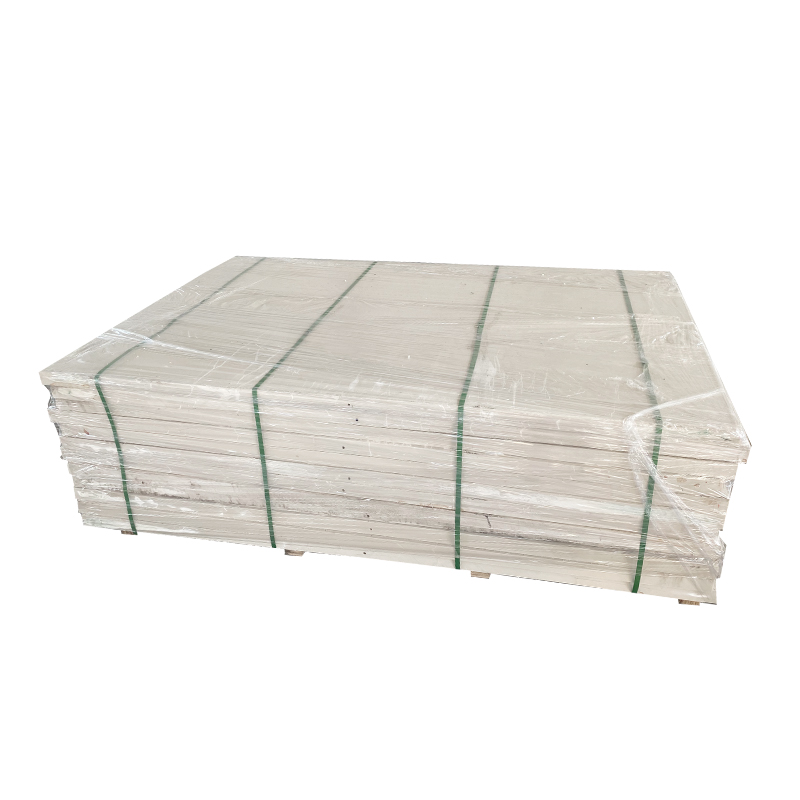
We SHUNDA manufacturer Have 20 Years experience in Nylon Board/Sheet, Nylon Rod, PP Rod, MC Casting Nylon Rod, Nylon Tube, Nylon Gear, Nylon Pulley, Nylon Sleeve, Nylon Pad, Nylon Ball, Nylon Flange, Nylon Chain, Nylon Connection, Nylon Stick, Nylon Screw&Nuts, Nylon Wheel, Nylon Fitting, Etc.
The process is roughly divided into: MC static molding, extrusion molding, polymerization molding.
By the way, Acting for the production of POM, PE, PP, PTFE, ABS, PVDF, PET, UHMW-PE, PC, PVC, PMMA and other materials; rods; importing PEEK, PPS, PEI, PSU, PI and other materials.
We insist on the principle of customers first, quality first, best price and service. And we hope to establish a long-term business relationship with you. We have strong supply chain channels and perfect product line, which can meet various kinds of customers' needs. We have a senior team of designers, super product development capabilities, advanced production technology, professional sales team to provide customers with one-stop service solutions.


Shunda Mission: Creative design, high quality products, Best Service, Shunda will be your best Choice.
― Thank you!Complete range of engineering plastic round tubes, rods, custom fittings, and containment vessels for extreme operating environments.