Precision extruded and cast high-performance engineering stock solutions formulated to dissipate mechanical shock waves and structural vibration harmonics.


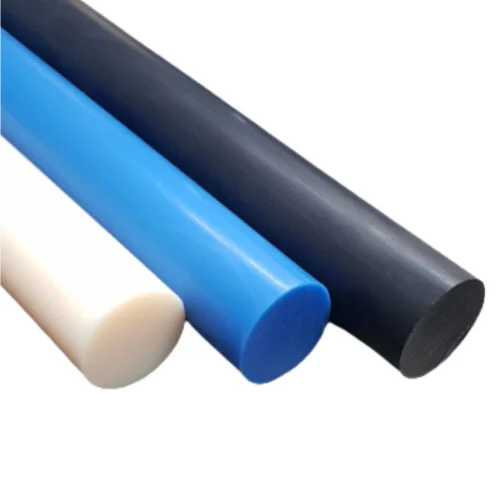
Engineered polyamides act as the structural backbone within advanced multi-layer acoustic insulation matrices.
Unlike steel or aluminum sleeves, nylon plastic pipes possess an inherent viscoelastic molecular matrix. This polymer chain architecture converts vibrational kinetic energy into harmless low-grade thermal dissipation, dramatically minimizing decibel transmission across structural interfaces.
When used as internal tubular sleeves for elastomeric and polyurethane noise reduction pads, nylon eliminates metal-on-metal squeal and dry friction chatter. Its self-lubricating characteristics ensure completely silent dynamic operation over millions of compression cycles.
Our cast PA6 and extruded PA66 nylon pipes withstand immense cyclic impact forces without permanent creep or deformation. They isolate anchoring bolts, center pins, and dowels in industrial vibrating machinery, rail tracks, and marine mounts.
In modern mechanical and architectural acoustic isolation systems, traditional steel and bronze inner sleeves are rapidly being phased out in favor of modified nylon plastic pipes. Vibration and structure-borne acoustic pollution are increasingly scrutinized under rigorous international workplace safety guidelines (OSHA, ISO 14001, and EU Directives on environmental noise). Heavy industrial machinery, high-speed rail lines, HVAC chillers, and hydraulic compression stations continuously propagate dynamic shock waves through concrete slabs and structural steel frameworks.
Noise reduction pads—frequently composed of elastomeric vulcanizates, neoprene, or microcellular polyurethane—require a rigid yet damping internal conduit through which tie-rods, mounting studs, or foundation bolts pass. When metal pipes are used inside these pads, they form an uninterrupted acoustic bridge, transferring high-frequency vibrations straight past the dampening elastomer into the subfloor. A customized Nylon Plastic Pipe for Noise Reduction Pads effectively breaks this acoustic short circuit, offering high yield strength while delivering acoustic loss factor performance orders of magnitude higher than metallic materials.
The efficiency of a noise attenuation pad relies heavily on the tangent delta (tan δ) or mechanical loss factor of its individual constituent layers. Polyamide (PA6, PA66, and Monomer Cast MC Nylon) exhibits an optimum modulus-to-loss ratio:
Track-bed noise reduction pads require internal nylon insulating pipes and dowels to isolate tie-plate fasteners. These nylon pipes endure dynamic wheel-load frequencies up to several thousand cycles per minute, dampening train vibrations, protecting surrounding residential zones, and providing dielectric electrical isolation for automated rail signaling circuits.
Impact-driven manufacturing equipment creates violent airborne noise and low-frequency floor rumble. Multi-tier isolation pads utilize custom-turned thick-walled MC nylon tubes to house guide pins. The resilience of the nylon sleeve prevents edge stress concentration in the elastomeric layers, doubling the pad's operational lifespan.
On naval vessels and offshore platforms, engine room decibel ratings are strictly monitored. Nylon plastic pipes deployed inside vibration mounts are totally unaffected by saltwater splash, bilge oils, and fuels, completely avoiding the rust encrustation that locks up steel sleeves and compromises silent engine operation.
Chillers, rooftop cooling towers, and elevator motor beds situated in luxury commercial buildings rely on elastomeric pads equipped with nylon isolation inserts. The nylon tube isolates anchor bolts from transferring motor hum into structural concrete columns, maintaining ultra-quiet NC-25/NC-30 interior acoustic standards.
As smart manufacturing and green building codes evolve, the formulation of nylon pipes for vibration dampening continues to progress rapidly:
We SHUNDA manufacturer Have 20 Years experience in Nylon Board/Sheet, Nylon Rod, PP Rod, MC Casting Nylon Rod, Nylon Tube, Nylon Gear, Nylon Pulley, Nylon Sleeve, Nylon Pad, Nylon Ball, Nylon Flange, Nylon Chain, Nylon Connection, Nylon Stick, Nylon Screw&Nuts, Nylon Wheel, Nylon Fitting, Etc.
The process is roughly divided into: MC static molding, extrusion molding, polymerization molding.
By the way, Acting for the production of POM, PE, PP, PTFE, ABS, PVDF, PET, UHMW-PE, PC, PVC, PMMA and other materials; rods; importing PEEK, PPS, PEI, PSU, PI and other materials.
We insist on the principle of customers first, quality first, best price and service. And we hope to establish a long-term business relationship with you. We have strong supply chain channels and perfect product line, which can meet various kinds of customers’ needs. We have a senior team of designers, super product development capabilities, advanced production technology, professional sales team to provide customers with one-stop service solutions.
Explore Our Full Products Line →State-of-the-art casting, polymer extrusion, and CNC processing facilities delivering premium nylon profiles worldwide.


Comprehensive product series engineered for vibration isolation, structural bushings, load-bearing pads, and severe dynamic operating environments.