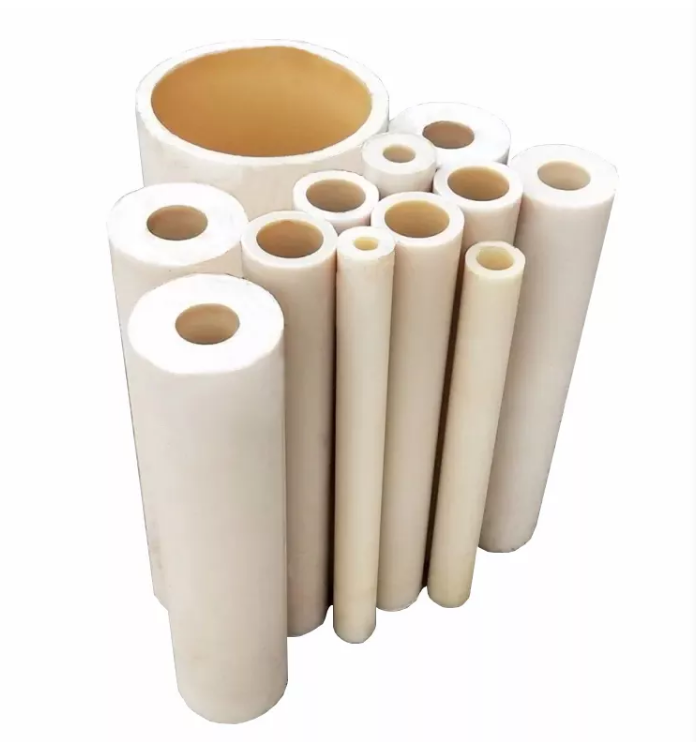


High-precision polyamide components engineered for structural rigidity, thermal stability, and low friction in demanding European production environments.


An in-depth analysis of how Italy's premier manufacturing clusters rely on reinforced polyamide sheets to substitute non-ferrous metals and optimize structural weight.
Italy stands as the second-largest manufacturing powerhouse in the European Union, celebrated globally for its high-precision mechanical engineering, advanced automation systems, packaging machinery, and automotive sports heritage. Within this intense industrial ecosystem, Glass Filled Nylon Board (specifically PA6-GF30 and PA66-GF30) has transitioned from an alternative engineering polymer to a primary structural material. From the bustling industrial districts of Lombardy and Piedmont to the high-tech packaging corridor of Emilia-Romagna (the celebrated "Packaging Valley"), factories and machine design bureaus demand engineered polymers capable of enduring aggressive mechanical stress, temperature spikes, and chemical exposure.
Unfilled polyamides (extruded PA6 or cast MC Nylon) deliver superior slip properties and elasticity; however, high-speed industrial mechanisms often subject machine parts to dimensional creeping, deflection under thermal load, and tensile strain. Integrating 30% to 50% chemically coupled E-glass fibers transforms the semi-crystalline nylon matrix into a rigid composite board. Italian machine builders utilize these glass-reinforced slabs to manufacture structural brackets, precision wear tracks, insulator plates, gears, and thermal isolation barriers, achieving weight savings of up to 70% compared to cast iron, bronze, or machined aluminum alloys.
Bologna, Parma, and Reggio Emilia host global leaders in automated packaging and bottling lines. Glass-reinforced nylon boards provide the high flexural modulus and dimensional stability required for high-frequency cam tracks, star wheels, and conveyor chain guides operating continuous 24/7 cycles.
Around Modena and Turin, high-performance motorsport and Tier-1 automotive suppliers employ PA66-GF30 CNC-machined structural boards for engine compartment brackets, under-the-hood fluid manifolds, and test jigs demanding heat deflection temperatures exceeding 200°C.
In Brescia, Bergamo, and Milan, precision tooling shops require low-internal-stress glass filled nylon slabs. Annealed boards prevent warping during deep CNC milling and boring operations for heavy industrial hydraulic valves and electrical switchgear backing panels.
Comparative material benchmarks outlining the mechanical, thermal, and electrical advantages of glass fiber reinforcement in semi-crystalline polyamide polymers.
When selecting glass filled nylon boards for custom fabrication and factory automation, design engineers must navigate the distinction between unmodified PA6 and glass-reinforced grades. The inclusion of surface-treated silane glass fibers dramatically suppresses hygroscopic expansion (moisture swell)—a classical vulnerability of pure polyamides—while increasing tensile strength and creep resistance under elevated thermal thresholds.
| Property Specification | Testing Standard | Unfilled PA6 Sheet | PA6-GF30 (30% Glass Filled) | PA66-GF30 (High Thermal) |
|---|---|---|---|---|
| Tensile Strength at Yield (MPa) | ISO 527 | 78 - 85 MPa | 150 - 175 MPa | 175 - 195 MPa |
| Modulus of Elasticity (Tensile) | ISO 527 | 3,000 - 3,300 MPa | 8,200 - 9,500 MPa | 9,500 - 11,000 MPa |
| Heat Deflection Temp (HDT 1.8 MPa) | ISO 75 | 70 - 75 °C | 185 - 200 °C | 230 - 250 °C |
| Coefficient of Thermal Expansion | DIN 53752 | 80 - 100 × 10⁻⁶/K | 30 - 40 × 10⁻⁶/K | 25 - 35 × 10⁻⁶/K |
| Dielectric Strength (kV/mm) | IEC 60243 | 25 kV/mm | 35 kV/mm | 40 kV/mm |
| Moisture Absorption (Equilibrium 23°C/50% RH) | ISO 62 | 2.6 - 2.9% | 1.7 - 1.9% | 1.4 - 1.6% |
Machining glass-reinforced nylon boards requires tailored processing parameters due to the abrasive nature of glass fibers on cutting tools. Italian CNC routing centers and machine shops typically adhere to the following technological guidelines:
From circular economy directives to AI-assisted CNC nesting, the Italian polymer sector is pioneering sustainable, high-efficiency engineering plastic consumption.
In accordance with European Green Deal directives, Italian converters increasingly specify chemically recycled or PIR (Post-Industrial Recycled) glass-filled nylon sheets, maintaining ISO certification and tensile integrity while lowering overall carbon footprints.
Italian mechanical workshops are implementing automated CAD/CAM nesting algorithms that account for fiber orientation within extruded and cast nylon boards, minimizing directional stress concentrations and raw material wastage.
The convergence of glass fiber reinforcement with internal solid lubricants (MoS2, PTFE, or graphite) provides both monumental rigidity and low friction coefficients, ideal for dry-running bushings and food packaging machinery.
Explore our full line of glass-filled polymers, cast polyamide shapes, high-strength structural profiles, and industrial components.