Commercial and Industrial Dynamics of Water Tank Sealing Solutions
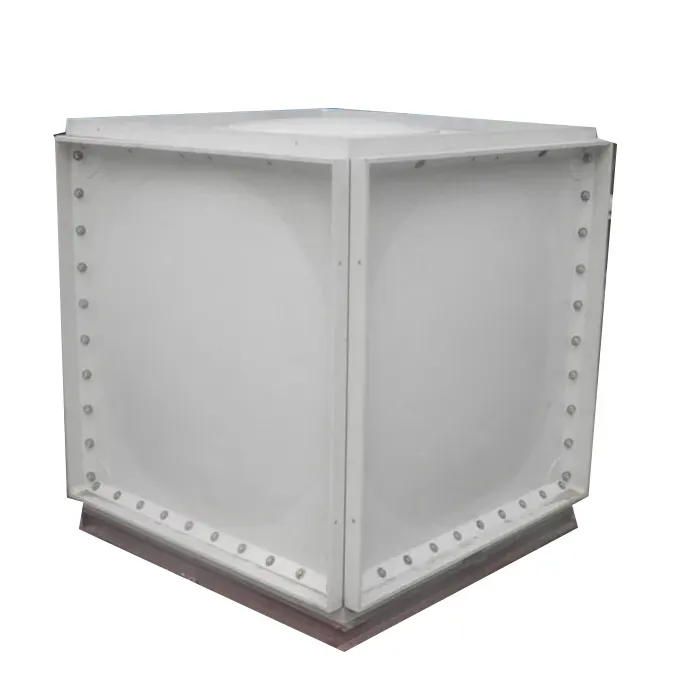
In municipal water storage, wastewater treatment facilities, chemical processing plants, and agricultural reservoirs, leak containment remains an absolute critical parameter. Historically, panel-type tanks—including Glass Reinforced Plastic (GRP), Sheet Molding Compound (SMC), and bolted stainless steel reservoirs—depended heavily on EPDM elastomeric strips and conventional silicone sealants. However, evolving structural demands, high dynamic water heads, and higher chemical sanitation requirements have exposed clear vulnerabilities in soft elastomer matrices, such as rapid degradation under chlorination, thermal fatigue, and compression set failure.
Today, the industrial containment sector is witnessing a decisive transition toward high-modulus, machinable semi-crystalline polymers. Extruded Nylon Rod (Polyamide 6/PA66) has established itself as an essential core component in high-performance sealing designs. By processing high-molecular-weight extruded nylon rods into precision-machined flange back-up rings, anti-leak washers, internal tie-rod sleeves, structural compression spacers, and high-tolerance O-ring retaining grooves, civil engineers and industrial designers achieve a level of pressure security and mechanical longevity that traditional sealing solutions cannot provide.
Deep Application Scenarios for Extruded Polyamide in Liquid Containment
Extruded Nylon rods are rarely deployed as simple raw rods in sealing configurations; instead, their high machinability and continuous crystalline matrix allow precise CNC-turning into bespoke sealing parts configured for rigorous hydromechanical tasks:
-
Modular Tank Joint Compression Collars: In GRP/SMC panel assemblies, excessive bolt torque can crush composite panel rims while insufficient torque causes edge weeping. Extruded nylon rods machined into calibrated load-distribution bushings provide uniform torque absorption, maintaining uniform interface compression on the inner sealing bead without panel delamination.
-
Submerged Structural Tie-Rod Sleeves: Large modular water tanks use internal cross-tie stays to counterbalance hydrostatic pressure. Machined nylon rod components serve as impermeable wall pass-throughs, simultaneously sealing against water bypass and insulating structural stainless steel stays against potential galvanic degradation.
-
Floating Roof & Peripheral Gasket Backing Rings: In large-scale industrial bulk storage tanks featuring internal floating covers, peripheral seals undergo continuous cyclical friction. High-density extruded PA6 provides ultra-low friction, high abrasion resistance, and permanent resilience against surface scoring.
-
Inlet/Outlet Flange Penetration Bushings: Hydraulic vibration near pump suction and tank discharge points creates recurring micro-gaps. Extruded polyamide dampens these low-frequency acoustic vibrations, preventing micro-ruptures along threaded tank inserts.
Technical Comparison: Extruded Nylon PA6 vs. Conventional Sealing Media
| Performance Characteristic |
Extruded Nylon (PA6 Rod) |
EPDM / Neoprene Elastomers |
PTFE (Teflon) |
Metallic (SS316 / Brass) |
| Compressive Yield Strength |
High (~85-90 MPa) |
Very Low (<5 MPa) |
Moderate (~12-15 MPa) |
Extremely High (>200 MPa) |
| Long-Term Creep Recovery |
Excellent under static load |
Prone to permanent set |
Subject to cold flow under load |
Rigid, zero elasticity |
| Galvanic Corrosion Potential |
Completely Inert / Insulating |
Inert |
Inert |
High risk in mixed metallurgy |
| Machinability & Tight Tolerances |
Exceptional (CNC-turned) |
Difficult / Die-cut only |
Good, but soft |
High cost, requires lubrication |
| Resistance to Water Chlorination |
Outstanding stability |
Degrades over 5-7 years |
Universal resistance |
Chloride pitting susceptibility |
Manufacturing Trends: Advancements in Extruded Polyamide Processing
The continuous extrusion of polyamide rods has benefited substantially from smart-manufacturing breakthroughs. Modern single-screw and twin-screw extrusion systems incorporate continuous ultrasonic scanning and automatic melt-temperature regulation. This eliminates micro-voids, voids, and residual internal stress centers—defects that could cause hairline crack formation or catastrophic micro-channel leaks when machined into high-pressure water seals.
Furthermore, specialized thermal annealing protocols post-extrusion ensure that the crystalline regions inside the nylon rod remain uniform from outer skin to internal core. This thermal treatment is essential when precision-turning fine threads, grooves, and retaining lips for tank penetrations, ensuring that parts maintain true concentricity and don't warp during ambient temperature swings.